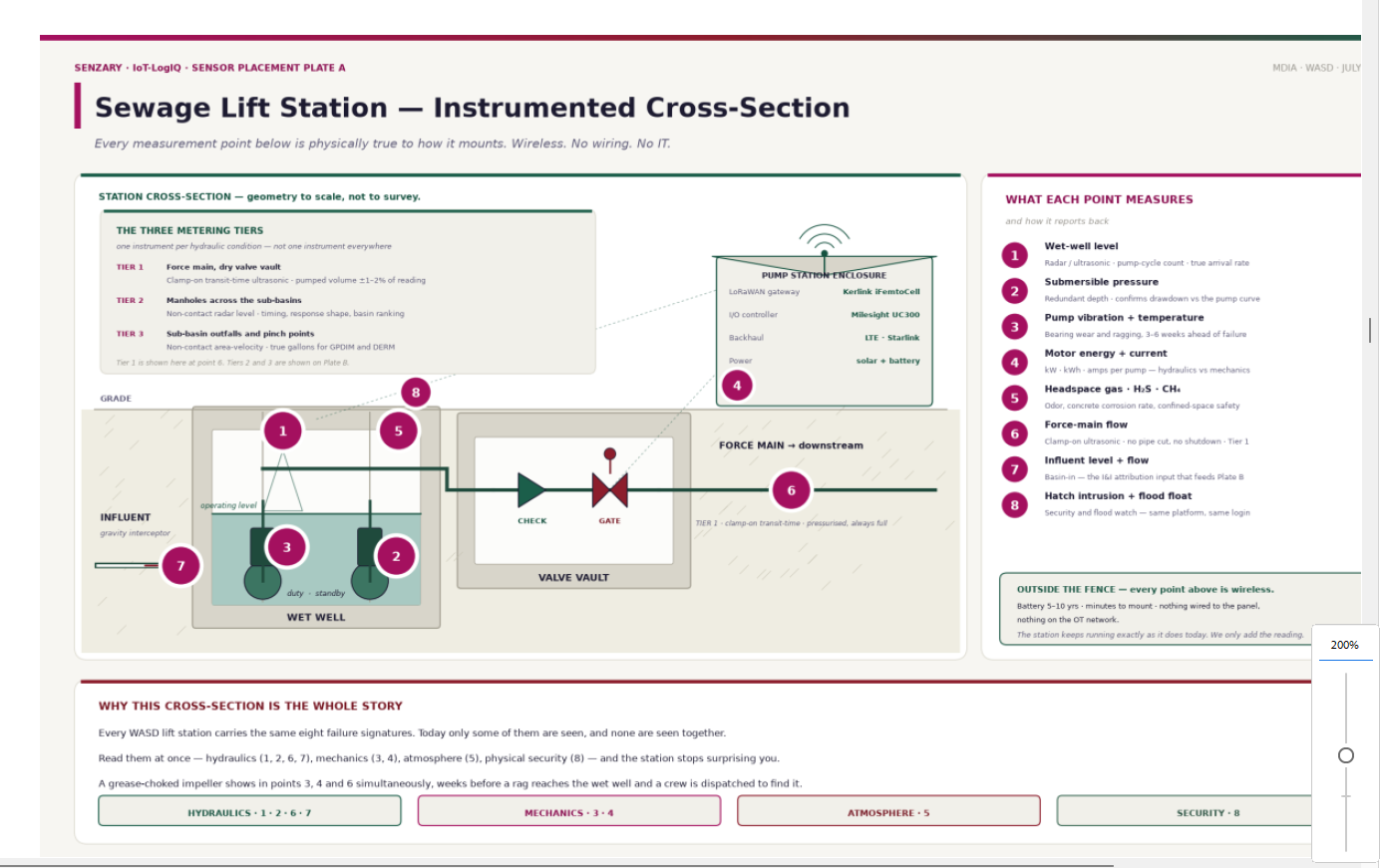
Verification plan
How measured flow is checked against rainfall and the rehab claim.
Anticipate and resolve
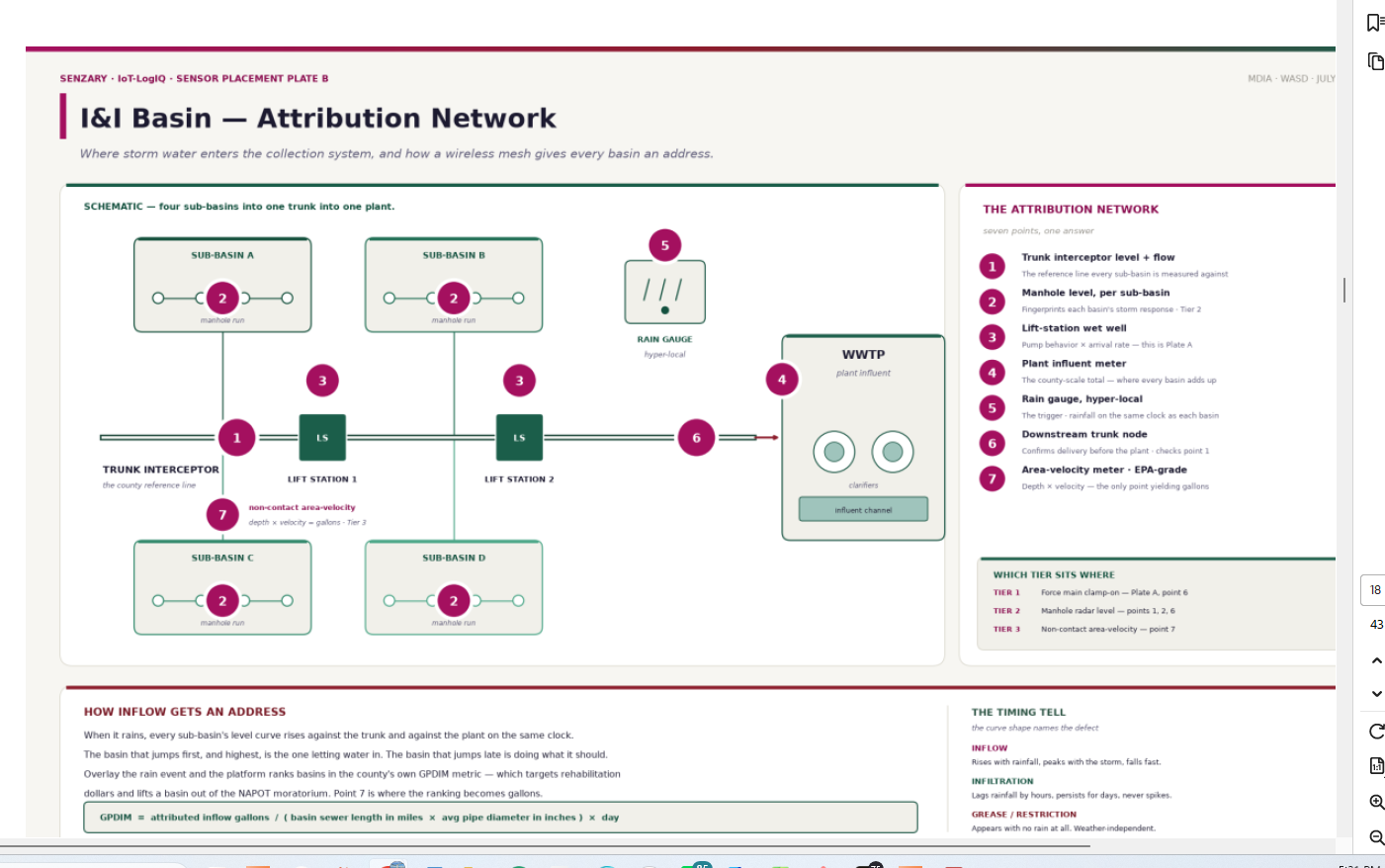
Where inflow enters, and how each basin gets an address
Response signatures
The curve shape names the defect.
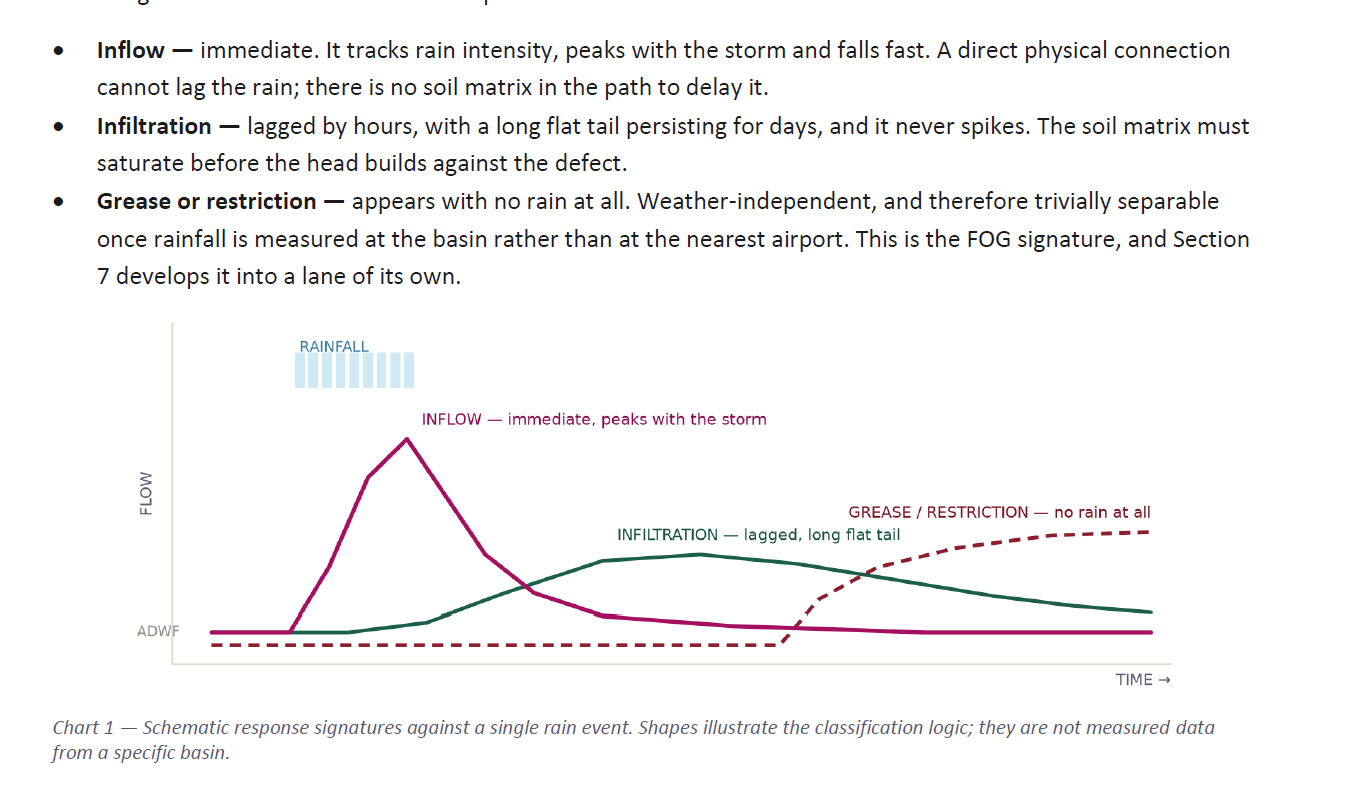
- Inflow. Immediate. Tracks rain intensity, peaks with the storm and falls fast. A direct connection cannot lag the rain.
- Infiltration. Lagged by hours with a long flat tail for days, and never spikes. The soil must saturate before head builds.
- Grease / restriction. Appears with no rain at all. Weather-independent, so it separates cleanly once rain is measured at the basin.
GPDIM normalization
Raw volume ranks by network size. GPDIM ranks by structural density of failure.
GPDIM = attributed inflow gal / (sewer miles × avg diameter in × day)
Basin A
1,000
100,000 gal/day over 100 in-dia-mi
Low priority. Diffuse minor cracking across a very large network — a maintenance program.
Basin B
50,000
50,000 gal/day over 1 in-dia-mi
High priority. Structural collapse or a severed lateral in a short run — a dig.
Raw volume would rank Basin A first, and it would be wrong. The same figure is recomputed after rehabilitation, so it is also the verification metric.